
Successfully preparing international nursing trainees for life in Germany
The EURASIA Institute for International Education (EIIE) in Berlin supports international applicants on their path to nursing training in Germany. The focus is on: language training, support during the application process and assistance with the transition to Germany.
Language training, application coaching and long-term support
EIIE does not act as a recruitment agency in this process. Applicants apply independently to German care facilities and employers. EIIE supports them in managing this process professionally and independently.
Preparation can begin whilst still in the applicant's home country. In addition to German language courses up to B2 level and nursing-related technical terminology, EIIE provides support, for example, in creating a professional application profile, CV and cover letter. Participants learn how to research suitable training providers and contact them independently. Furthermore, they receive support with registering for and utilising the services offered by the Federal Employment Agency, as well as with preparing for job interviews.
Two examples illustrate how this approach works in practice
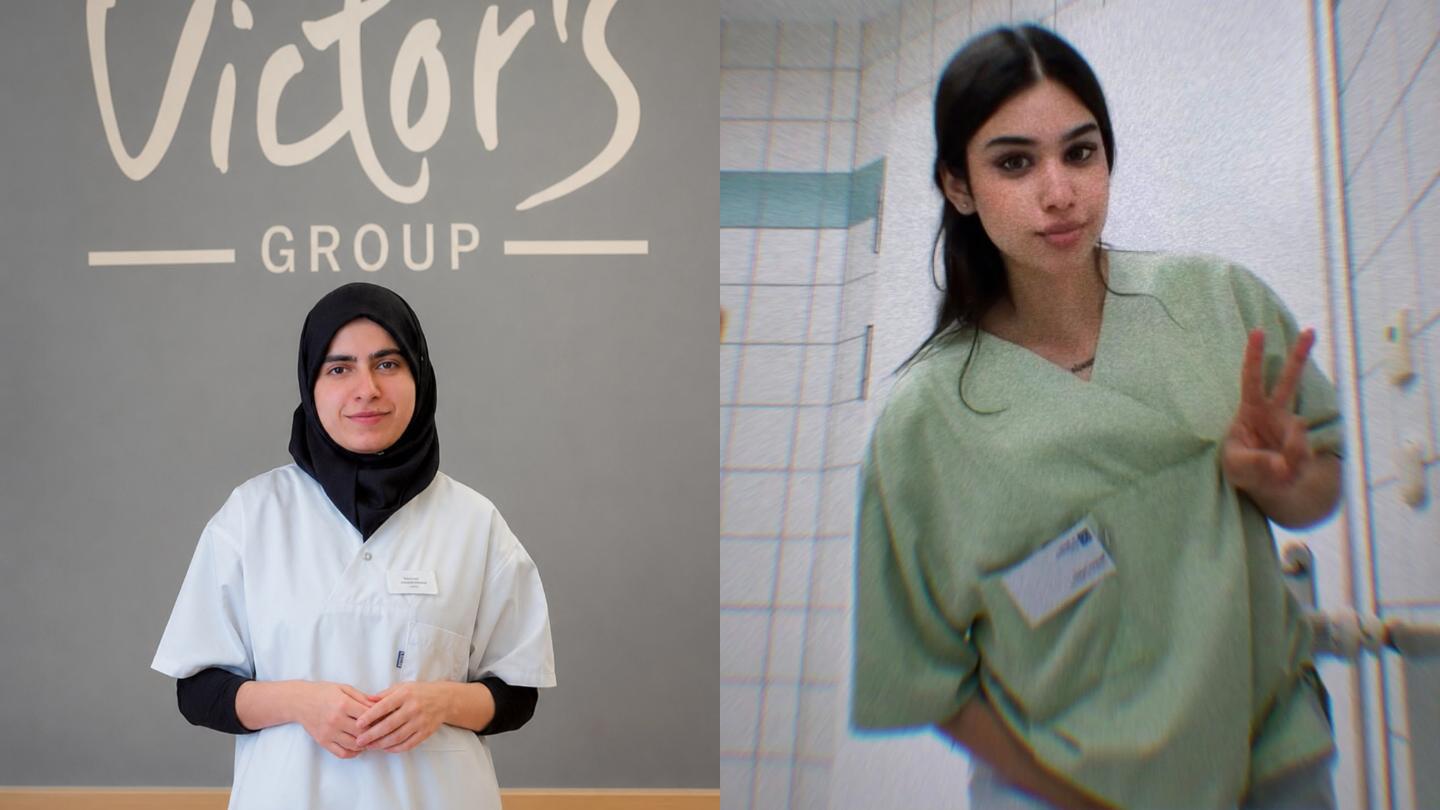
Example 1: Ayesha Tahir from Pakistan
Ayesha Tahir completed EIIE's online language programme in Pakistan up to level B2, including care-related technical terminology. At the same time, she was prepared for the German application process.
With support in preparing her application documents, developing her application strategy and preparing for interviews, she subsequently applied independently to German care facilities. Ayesha's application to Pro Seniore was successful, and in 2024 she began her training there as a generalist nursing assistant.
She is now in her third year of training and is expected to complete her training in March 2027. She plans to continue working in the German care sector afterwards and to gain further professional qualifications.
Even after her arrival, EIIE remained her point of contact for organisational and residence-related matters.
Her example shows how international applicants can be equipped, both linguistically and organisationally, whilst still in their country of origin, to find their own way into a German care training programme.
Example 2: Maryam from Bahrain
Maryam from Bahrain initially came to Berlin to improve her language skills and successfully completed her B2 German course at the EURASIA Institute.
EIIE then supported her with career guidance, helping her to prepare her application documents and prepare for job interviews. Maryam successfully applied to the Marienkrankenhaus Berlin, went through the selection process and completed a nursing placement there.
On 1 September 2026, she will begin her training as a generalist nursing professional.
Her example illustrates a second possible pathway: language training in Germany, targeted preparation for the labour and training markets, and subsequently a successful independent application for a training place.
What makes the model successful?
Based on EIIE's experience to date, three factors in particular have proved to be important:
- Language and technical terminology: Early preparation up to B2 level and nursing-related technical terminology facilitate the transition to vocational school and practical nursing work.
- Empowerment to apply independently: Participants learn how to prepare professional application documents, research and contact employers, and conduct successful job interviews. EIIE provides support and training – the candidates themselves handle the application process and selection of employers.
- Support beyond arrival: Even after their training has begun, international trainees can receive support with organisational, language and integration-related issues. This can also ease the burden on the training organisations.
Collaboration with German care organisations
EIIE aims to expand this approach in collaboration with other German care organisations. The collaboration can begin even before arrival, with online language courses, B2 preparation and specialist care terminology, and continue after arrival with language and organisational support.
This creates a seamless process:
Language training
→ application profile and application documents
→ independent job search and application
→ interview preparation
→ start of training
→ ongoing integration support in Germany
The aim is not only to enable young people from abroad to access nursing training, but also to prepare them in such a way that this can lead to a successful training programme and long-term career prospects in Germany.