

Energy Transition in the Pacific – New Opportunities for German VET Providers
The Pacific Island nations are becoming increasingly important as potential partners, particularly in the expansion of renewable energy. This was the focus of the information event held on 5 May 2026, at which German education providers networked with partners from the Pacific region.
The German-New Zealand Chamber of Commerce (AHK New Zealand) organised the information event in collaboration with iMOVE and the OAV (German Asia-Pacific Business Association) as specialist partners, as part of the Market Entry Programme (MEP) run by the Federal Ministry for Economic Affairs and Energy.
The Pacific Island nations are increasingly becoming the focus of international cooperation – and for good reason. The expansion of renewable energy is developing particularly dynamically there.
The German-New Zealand Chamber of Commerce (GNZCC) took this as an opportunity, in partnership with iMOVE and the OAV, to bring together German training providers with representatives from Fiji and Tonga at the Federal Institute for Vocational Education and Training (BIBB) in Bonn in the form of a hybrid information event.
A look into the region
According to Iris Heinz, Head of DEinternational Projects & Services at the German-New Zealand Chamber of Commerce, the island nations are under significant economic pressure due to their continued heavy reliance on fossil fuel imports and the current high costs of these fuels. As a result, governments across the region have set ambitious targets to increase the share of renewable energy to up to 100 per cent by 2035.
Given the islands' geographical location, decentralised solutions such as solar power systems, microgrids and battery storage play a crucial role, says Heinz. In addition to investment in the relevant technical infrastructure, the focus is on training skilled workers who can install, operate and maintain these systems.
This is leading to strong and growing demand for vocational training and further education. In particular, there is a need for flexible, modular and often digitally delivered training programmes that can reach people on remote islands.
The Pacific islands are on the front line of the threat posed by climate change, says Enrico Rühle, Managing Director of Smart Industry Campus GmbH and Head of the OAV's TVET Working Group. In his view, the energy transition is inevitable and must rely not only on high-quality technologies but also on appropriate and practical training for skilled workers.
This presents a clear opportunity for German companies: not only to export technology, but also to position themselves as long-term partners in building local expertise and capacity. Silvia Niediek, iMOVE Regional Manager, emphasised this point and drew the participants' attention to the various opportunities for cooperation available through iMOVE.
Potential for the German education sector:
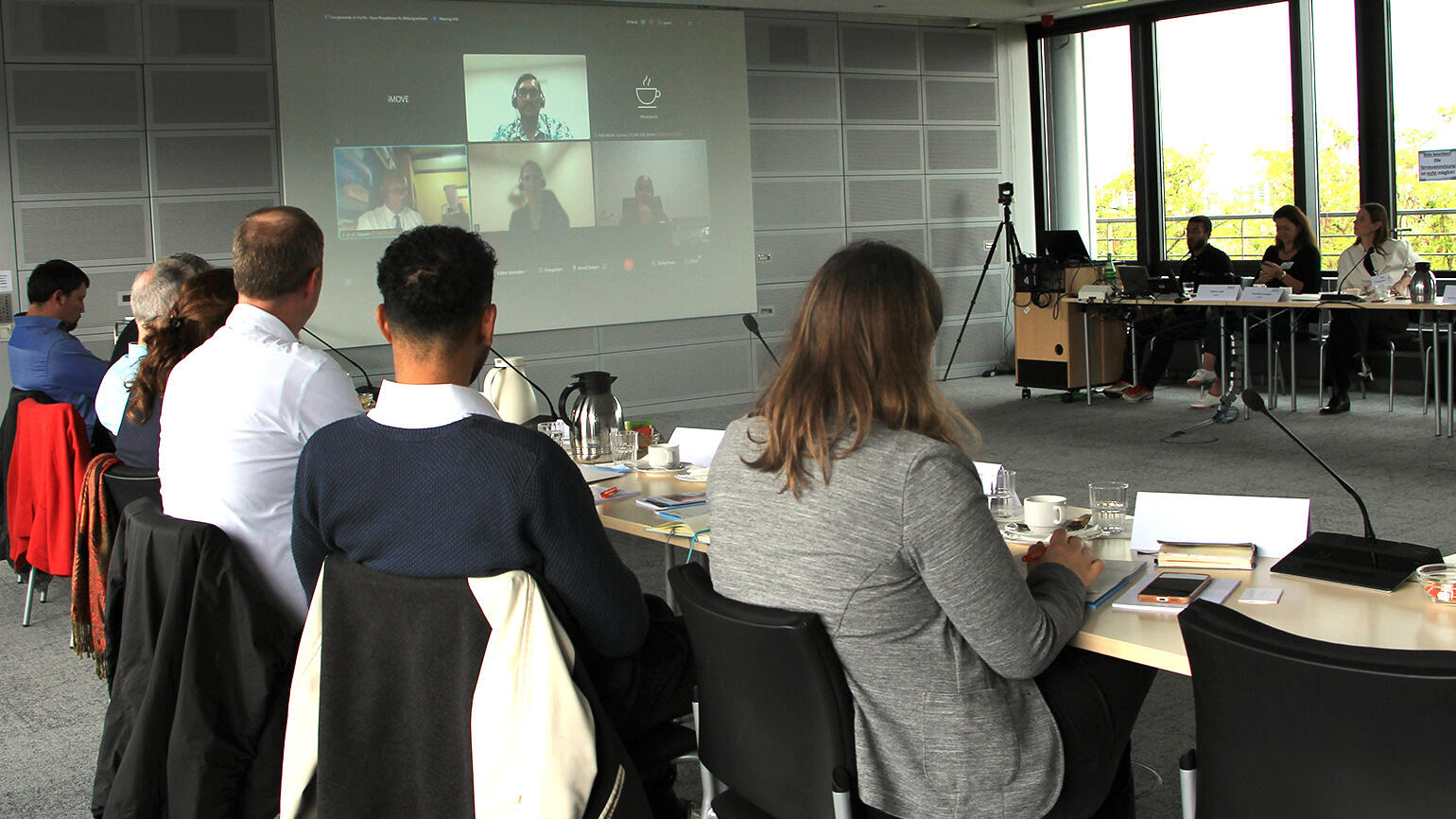
Joining the event via conference call from Fiji, participants welcomed Dr Eci Tekuru Naisele, Director of Fiji Higher Education Commission (FHEC). He presented the existing training initiatives in the field of renewable energies.
At present, these initiatives are primarily found in a university context. In the field of vocational training, obstacles arise from a lack of programmes that are too theory-based, lack practical relevance and use outdated technology. Naisele sees the advantages and associated opportunities arising from cooperation with German education providers in the dual training model, practice-oriented curricula, collaboration with industry, high technical standards and modular training.
Qualifications are particularly important in the following areas of training:
- Photovoltaics
- Battery systems
- Microgrids
- Energy audits
- Safety standards
- Climate infrastructure
- Entrepreneurship
- Project financing
- Training of trainers
Naisele made an appeal, stating that the energy transition must go hand in hand with a shift in people's mindsets and that investment in education is therefore needed now.
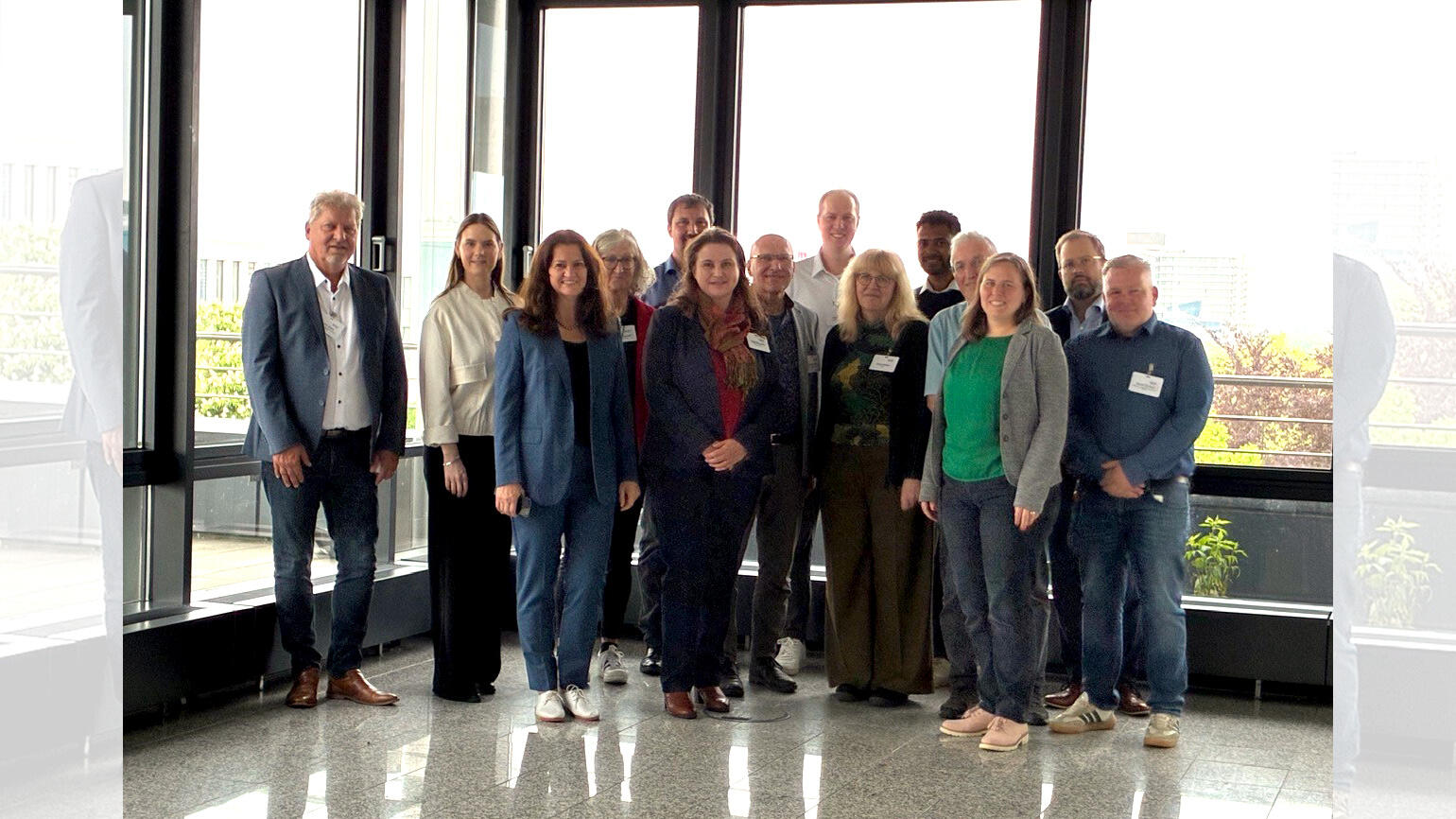
Participants in the information event
Also joining the discussion live from Tonga, Vilimaka Foliaki, Chief Executive Officer of the Tonga National Qualifications and Accreditation Board (TNQAB), provided important insights.
Foliaki noted that the energy transition is significantly altering the labour market in the countries concerned and that redesigning qualifications is therefore also an important step for society. In his view, it is crucial to adapt curricula to the new needs of industry.
He advocated modular learning with modules that build on one another. This makes it easier to facilitate further upskilling or reskilling. He added that curricula represent a living framework that must be flexibly adapted to different needs. He also hopes for cooperation with German training providers and their expertise in the area of professional recognition.
To conclude, Atesh Gosai, Programme Manager at the EU Delegation to the Pacific, presented the European Union's strategies on renewable energy.
One of these EU initiatives is 'Global Gateway’' which was launched in 2021 and has a funding envelope of over 300 billion euros. The strategy aims to promote smart, clean and secure connectivity in the digital economy, energy and transport sectors, whilst simultaneously strengthening health, education and research systems worldwide.
He reported on an EU-Pacific Economic Forum held in Fiji in 2025, which is due to be held again in 2027. The EU is also exploring the private sector's interest in establishing an EU-Pacific Economic Platform. The energy transition is being pursued as a high priority by the EU, according to Gosai. To this end, the European Commission is providing financing tools to overcome investment barriers.
Conclusion and Outlook
Representatives from the Pacific Islands impressively demonstrated how even smaller markets can become more attractive through clear strategies and ambitious reforms. Despite structural challenges, exciting prospects are emerging here for the German TVET sector.